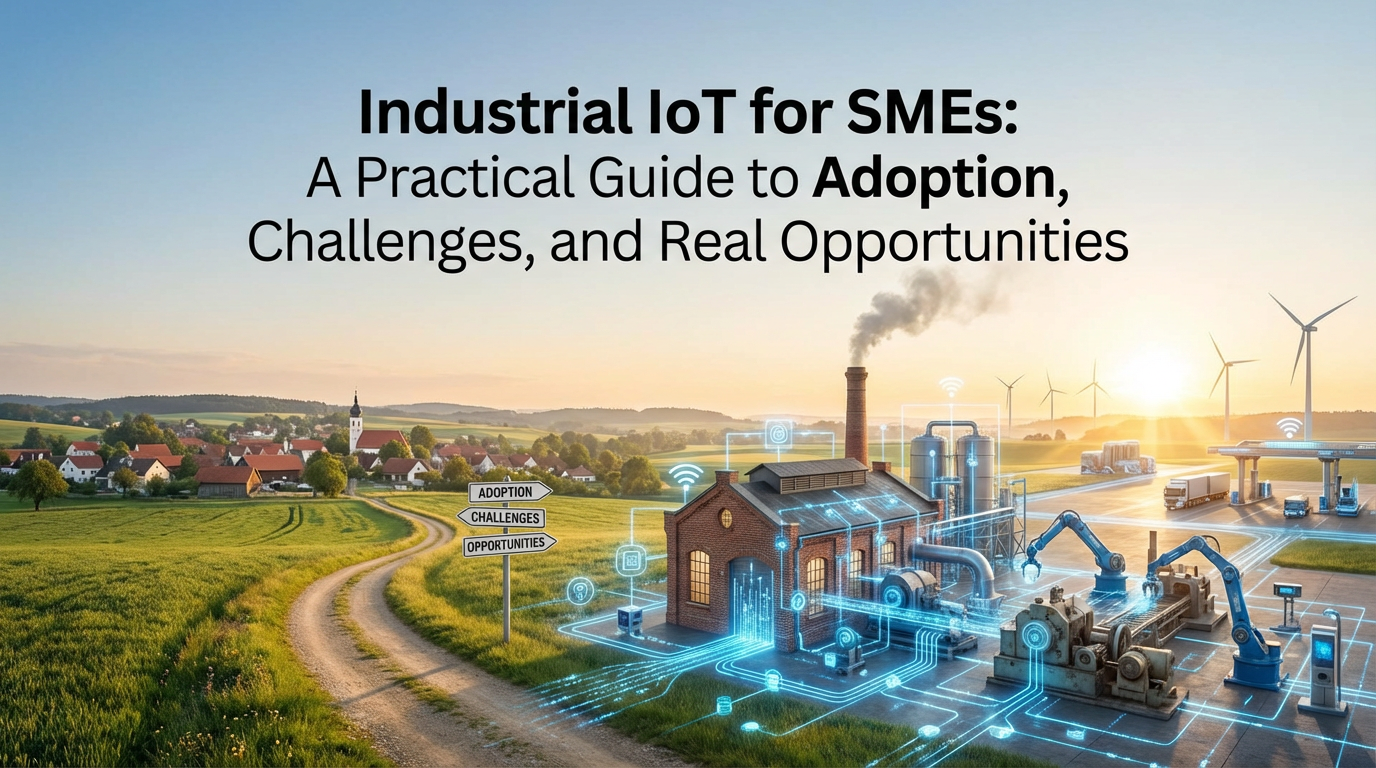
The Industrial Internet of Things (IIoT) is reshaping modern manufacturing. Large enterprises often lead the conversation, but small and medium-sized enterprises (SMEs) are now in a position to benefit the most. With connected sensors, real-time monitoring, and data-driven automation, IIoT can transform everyday operations. However, adoption remains difficult for many SMEs. Understanding these challenges and knowing how to overcome them is the key to long-term success.
Main Challenges for SMEs
Financial Barriers Prevent Many SMEs From Getting Started
Implementing IIoT often requires a significant upfront investment. Purchasing smart sensors, networking equipment, cloud platforms, or analytics software can be expensive. For companies working with tight budgets, these costs can slow down progress or stop projects before they begin.
Legacy Machinery Makes Integration Difficult
Many SMEs operate with older equipment that was never designed to connect to modern networks. This creates integration problems because new IIoT solutions must work with machines that have unlimited digital capabilities. Retrofitting, upgrading, or replacing equipment requires additional investments and technical expertise.
Lack of Technical Talent Slows Down Digital Transformation
IIoT adoption demands skills in cybersecurity, networking, data analytics, connectivity, and hardware integration. Most SMEs do not have internal teams with these capabilities. Hiring new staff or training existing employees can be expensive and time-consuming. As a result, many companies delay IIoT programs simply because they lack the talent required to manage them.
Interoperability and System Complexity Create Additional Friction
Industrial IoT ecosystems rely on devices and softwares from different manufacturers. Each may use different protocols, standards, or data formats. Without careful planning, companies may end up with systems that cannot communicate effectively. This limits scalability, restricts automation, and increases long term maintenance costs.
Uncertainty About ROI Makes Leaders Hesitate
Even though IIoT solutions can save money over time, the initial investment may take months or years to recover. Many SME executives are reluctant to commit to expensive modernization efforts when the short term payoff is unclear. This uncertainty makes decision makers cautious about large scale digital initiatives.
The Advantages of IIoT for SMEs Are Too Strong to Ignore
Despite the challenges, the potential rewards are significant. IIoT creates real competitive advantages by improving accuracy, reducing downtime, enhancing visibility, and lowering operational costs.
Predictive Maintenance Reduces Costly Downtime
Sensors can detect abnormal equipment behavior long before a failure occurs. This helps maintenance teams repair or replace parts at the right time. The result is fewer breakdowns, lower maintenance costs, and more stable production schedules.
Operational Efficiency Improves Across the Entire Facility
Real-time data allows companies to identify wasted energy, inefficient processes, and production bottlenecks. This helps managers make informed decisions that reduce waste and improve overall production efficiency.
Quality Control Becomes More Accurate
Automated inspections and data monitoring help detect small quality issues before they escalate. By spotting inconsistencies early, companies reduce scrap, prevent rework, and maintain consistent product quality.
Inventory and Supply Chain Management Become More Predictable
IIoT systems provide better visibility across the supply chain. Sensors track inventory levels, monitor shipments, and trigger alerts when materials need to be replenished. This reduces stockouts, overstocking, and delays in production.
New Revenue Models Become Possible
SMEs can expand beyond traditional production by offering smart services such as remote monitoring, equipment usage tracking, or subscription-based service models. IIoT creates new business opportunities and allows companies to differentiate themselves.
Sustainability Becomes Easier to Achieve
Connected systems help companies track energy usage, reduce electricity waste, and lower carbon footprints. This supports corporate sustainability goals while also reducing operational costs.
A Practical Roadmap for SMEs Beginning Their IIoT Journey
Successful IIoT adoption requires the right strategy. SMEs can reduce costs, limit risk, and achieve faster results by following a structured approach.
Start Small and Expand Gradually
Begin with a single use case, such as equipment monitoring or energy tracking. Once the initial project shows results, scale to other areas of the business. A phased approach reduces cost and increases the chances of success.
Collaborate With External Experts
Partnering with IIoT vendors, consultants, or integrators provides access to specialists who already understand the technology. This reduces implementation time, lowers risk, and ensures a smoother deployment.
Choose Flexible and Scalable Technologies
Select platforms and devices that support open standards. This helps avoid vendor lock-in and makes future expansion much easier. A well-planned architecture protects the company from expensive rework.
Focus on Training and Internal Adoption
IIoT transformation requires cultural alignment just as much as technical execution. Employees must understand the new systems, feel comfortable using them, and trust the data. Training and change management are essential for long-term success.
Prioritize Use Cases With Fast and Measurable Returns
Select IIoT opportunities that deliver immediate, visible value. Examples include predictive maintenance, energy monitoring, and production tracking. Demonstrating quick wins builds confidence and encourages leadership to approve larger initiatives.
Conclusion – Cost Effective PdM
Industrial IoT is poised to transform how SMEs operate, offering gains in efficiency, product quality, and operational insight. While implementing these technologies comes with challenges, a structured approach and the right guidance can make the transition manageable. For organizations looking to embrace predictive maintenance without the traditional high costs, solutions like our PdM platform offer a more accessible path, helping businesses monitor equipment health, reduce unexpected downtime, and capture the benefits of smart manufacturing in a more budget-friendly way. With careful planning and gradual adoption, SMEs can step confidently into a more resilient, data-driven future.